-
-
Taymour Grahne Projects is pleased to present 'On Landscape’, an online group project featuring works by Samira Abbassy, Jumana Emil Abboud, Roudhah Al Mazrouei, Nadim Asfar, Nour Bishouty, Gohar Dashti, Hicham Gardaf, Lamia Joreige, Ziad Naitaddi, Nicky Nodjoumi, Hiraki Sawa, and Ayman Zedani, opening on March 31, 2026.
-
-
-
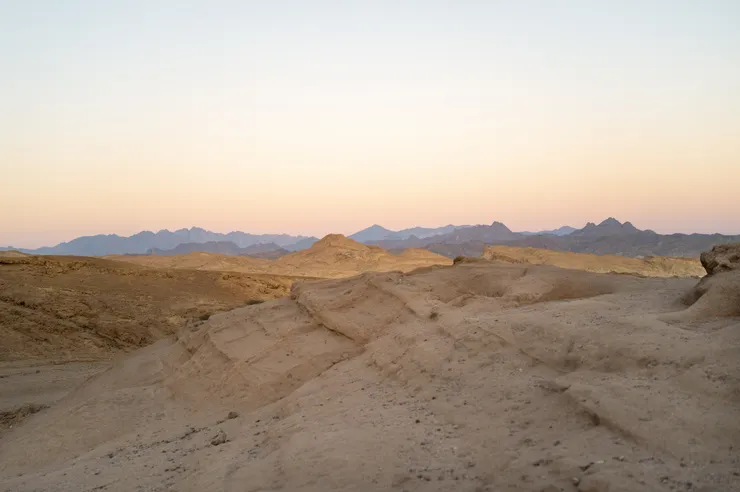
This Spring, Taymour Grahne Projects presents an online group exhibition by a global gathering of artists entitled On Landscape. In this exhibition, twelve artists present a kaleidoscopic multiplicity of views, opening the idea of landscape as a rich and dynamic field of meanings, readings and analogies.
On Landscape features work by Samira Abbassy, Jumana Emil Abboud, Roudhah Al Mazrouei, Nadim Asfar, Nour Bishouty, Gohar Dashti, Hicham Gardaf, Lamia Joreige, Ziad Naitaddi, Nicky Nodjoumi, Hiraki Sawa, and Ayman Zedani. Each participant takes a distinct position and method, in keeping with their distinct praxes, yet each assert landscape as active, symbolically fertile terrain. To these artists, a landscape is a repository of personal and collective histories, shifting political realities, emotional and psychological fields.
-
Ayman Zedani
-
Saudi Arabian artist Ayman Zedani’s research-driven practice engages with the ecological and speculative dimensions of landscape, particularly within the context of the Arabian Peninsula. In his panoramic scenes of the Kingdom’s interior, Zedani creates landscapes are not only records of place but spaces where new narratives about human and non-human relationships can emerge.
-
-
 Image courtesy of the artist
 -
Samira Abbassy
-
NYC-based artist Samira Abbassy’s intricate, symbolic compositions Tree Spirits (2025), Nocturnal Bird Spirit (2021) employ Persian visual traditions and diasporic experience to construct scenes that encompass internal and mythological narratives. Her work is known for its profound consideration of human existence: how we approach and absorb loss, how identity fractures and reforms. Her characteristic intuition, Jungian psychology, and dense weaves of art-historical and cross-cultural references are timelessly universal. Like many of the artists featured here, her works transcend geography to map deep internal terrains of belonging and cultural inheritance.
-
-
Nour Bishouty
-
Multidisciplinary artist Nour Bishouty’s sculpture, publishing, and archival interventions explores ways in which histories are constructed - and withheld. Her wood-carved figurines such as Lamb (2022) and Donkey (2022) take as their point of departure, the art-historical term ‘staffage’ - the minor human or animal figures traditionally inserted into landscape paintings to animate or suggest scale. Here, Bishouty flips the marginal status of such symbols by foregrounding them from illustrative device to intransigent presence.
-
-
Nicky Nodjoumi
-
Iranian-born New Yorker Nicky Nodjoumi’s paintings present complex pictorial spaces in which figures, architecture, and landscape coexist in characteristically ambiguous configurations. Nodjoumi’s landscapes are not naturalistic, but surreal arenas where power dynamics are presented within a rich palette of historical references. In Nodjoumi’s fantastical world, which has evolved over the decades, landscape becomes a nightmarish theatre of human behaviour, shaped by forces both visible and unseen.
-
-
Roudhah Al Mazrouei
-
Emirati artist and researcher Roudhah Al Mazrouei offers a conceptually rich approach to exploring landscapes in her work. Typically, she uses elements such as found rocks, sikham charcoal, and traditional scent mixtures in her pieces, and in doing so, these materials become living archives themselves. In works such as Mountain Palm Mountain (2023) and Box II (2025), landscapes decouple from static spaces to become, as the artist shows, slowly evolving terrains shaped by a sprawling symbiosis between environment and human presence.
-
Image courtesy of Ahmed Tarek
-
Lamia Joreige
-
Archival research has been a cornerstone of Lamia Joreige’s practice over many years, with a specific focus on the reverberations of war. On Landscape features Joreige’s Nights and Days (2007), a series of photographic works created in the aftermath of the 2006 Lebanon War. It was your body I saw (2007) and Are we so far away (2007) are taken from the series which references at various points, fragments of Super 8 film, videos and written notes made during that summer. These works from Nights and Days reflect on representations of violence and war, presenting post-war landscapes as unstable, delicate - and incomplete.
-
Artist Portrait by Polly Thomas
-
Gohar Dashti
-
Gohar Dashti frames her contribution to On Landscape with a quote from Susan Sontag reflecting on the evolution of photography in parallel with mankind’s sustained trashing of the planet. A series of images, Disappearing Nature, gives us a set of mutilated and degraded Polaroid photographs in varying stages of legibility. Some are still, just about discernible as images of trees, plants or flowers. Others have been destroyed or obliterated by smears, smudges and blodges of paint. Natural landscapes, Dashti’s work argues, are in crisis. But with today’s technology, we are more capable than ever of charting their destruction.
-
Artist Portrait by Hamed Noori
-
Hicham Gardaf
-
Moroccan artist Hicham Gardaf approaches landscape through a piercing, observational lens. Playing with formal approaches spanning paint, print and photography, -is colour pigment prints present landscape as an abstracted experience. From minimalist slivers of skies, bisecting planes of colour, abstracted buildings, empty terrains - these works resound with profound, gripping spatial impact.
-
Artist Portrait by Maja Ngom
-
Nadim Asfar
-
Lebanese artist Nadim Asfar says of his horizon in Drawing lines with circles, Andros to Giaros, Greece (2024), ‘In Greece, I photograph horizons because I feel surrounded by time more than space’. In On Landscape, Asfar also presents Drawing lines with circles, Crete (2024), a similarly vast and empty vista, anchored by a small rocky outcrop. Here, not only is the visual of the horizon key, as a metaphor of time and space, but as the artist emphasises, we’re invited to consider the specific moment in time he has captured, a unique moment when perpetually transient elements coalesce into a single moment in the universe, immortalised by one man and his camera.
-
-
Jumana Emil Abboud
-
Jumana Emil Abboud is a Palestinian Canadian artist working across multiple media and histories. In the eight drawings on paper featured in On Landscape, Abboud draws on folk tales and personal recollections connected to specific landscapes in Palestine. She particularly references sites of water such as springs and streams, and the spirits that inhabit them. In her works, figures, animals, and shifting landscapes appear and disappear, morphing into a rich tapestry of imagery, memory and myth. ‘It’s my hope that they allow the spirit of stories tied to our entanglements with water to continue circulating,’ says Abboud. ‘[To] re-animate cultural landscapes that resist erasure’.
-
Artist Portrait by Rich Wiles
-
Hiraki Sawa
-
Japanese-born multimedia artist Hiraki Sawa’s practice pivots on time, memory, and the layered nature of landscape. Sawa’s idea of place is as an accumulation of lived histories, presences, as well as the possible futures, yet to unfold. Working intuitively and seeking a state of near-unconscious creation, Sawa employs charcoal on large-scale paper as a temporal trace, allowing the movement of his own body to subtly distort and register the image.
-
Image courtesy of DURAMA
-
Ziad Naitaddi
-
Ziad Naitaddi’s photographic series The Absents 1-7 engages explicitly with migration, exile, and belonging. In On Landscape, Naitaddi is represented with a series of stark monochromes, Morocco High-Atlas (2019-2021) in which the artist and movie aficionado photographs landscapes marked with absence, spaces where figures are missing, displaced, or reduced to traces. When a person leaves their homeland for a and settles in a foreign land, does a true sense of belonging emerge? Not always, as Naitaddi considers in this poignant series of lonesome, monochromatic photographs.
-
-
Image courtesy of the artist
-
Across this assemblage of varied practices, On Landscape articulates a shared understanding of landscape as something inherently unstable and deeply relational. This exhibition explores how landscapes are shaped by movement, people, politics, histories, and materials. And in turn, it offers manifold perspectives about how we shape our understanding of identity, memory, and belonging, across a world of geographic and cultural dialogues.
-
On Landscape
Past viewing_room